The idea behind Ironwood Collective did not come from a trend. It came from observing something consistent: when people work with their hands in a structured way, something shifts.
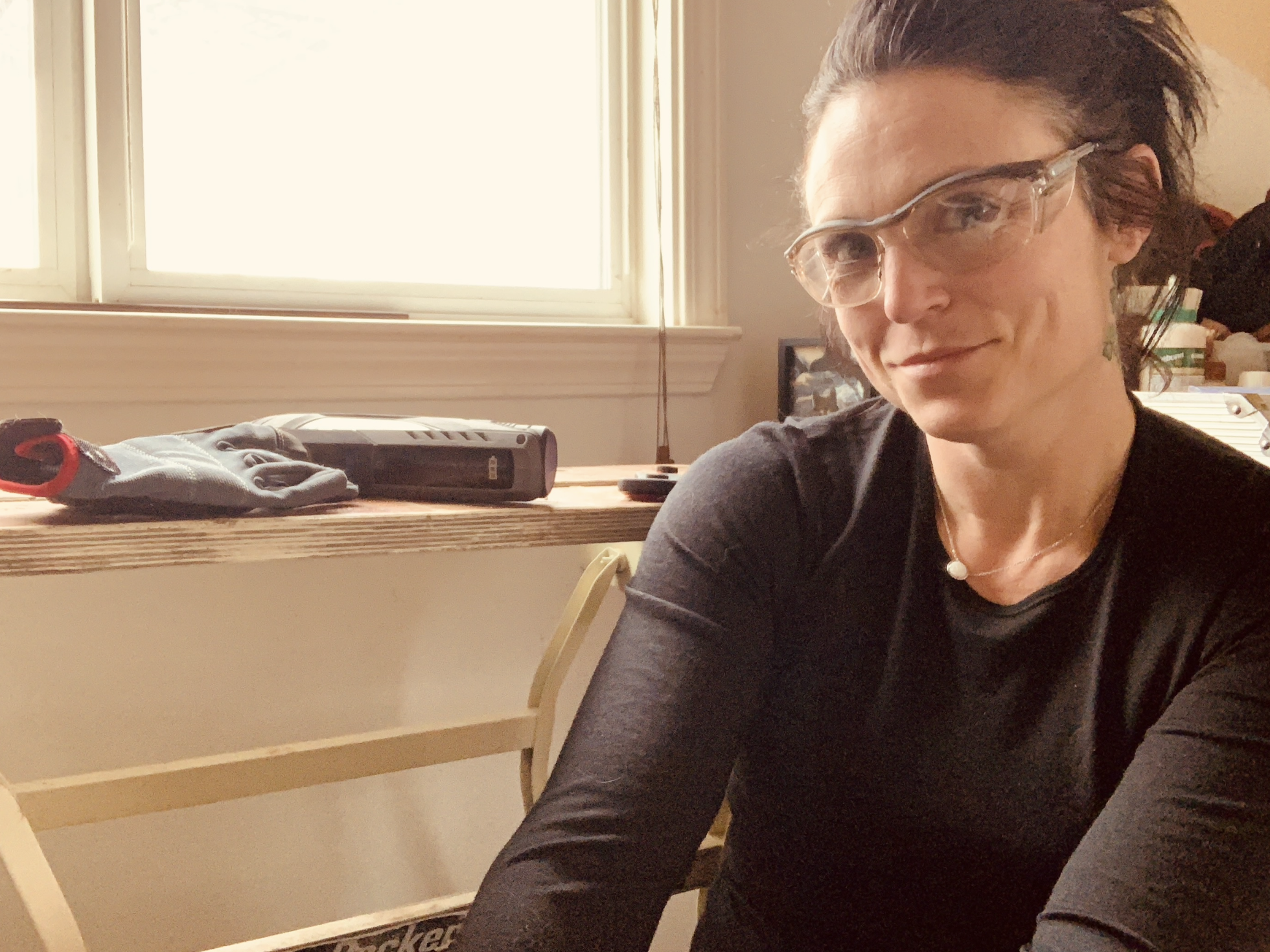
Breathing slows. Attention narrows. The nervous system settles.
For years, I noticed that deliberate, repetitive handcraft—woodworking, carving, sanding, shaping—produced a level of focus and internal steadiness that felt different from distraction. It wasn’t escapism. It was regulation.
Ironwood Collective was built around that principle.
Why Working With Your Hands Changes the Brain
Neuroscience supports what craftspeople have known for generations. The human brain is deeply wired for sensorimotor integration—the coordination between movement and sensory input. When we engage in precise, repetitive hand movements, several systems activate simultaneously:
• The motor cortex (movement planning and execution)
• The somatosensory cortex (touch and tactile feedback)
• The cerebellum (fine motor control and timing)
• The prefrontal cortex (attention and executive function)
When these systems engage together in a focused task, cognitive rumination decreases. This is similar to what psychologist Mihaly Csikszentmihalyi described as “flow state”—a condition in which skill level and challenge are appropriately matched, producing deep immersion and reduced self-referential thought.
Additionally, tactile engagement stimulates mechanoreceptors in the skin. These receptors send signals that can downshift sympathetic nervous system activation (the “fight or flight” response) and increase parasympathetic tone (the “rest and regulate” state). Slow, repetitive movement combined with tactile feedback can measurably reduce physiological stress markers.
In simple terms: the body influences the mind.
Structured Repetition Builds Psychological Stability
Ironwood is not unstructured crafting. It is structured handcraft.
Structure matters.
Psychologically, predictability reduces threat perception. When a person engages in a task with clear steps, defined tools, and measurable progress, the brain experiences control and completion. These experiences strengthen self-efficacy—the belief that “I can do hard things and see them through.”
Repeated completion of small, controlled tasks builds confidence more reliably than motivational language ever will.
This is especially relevant in environments where people feel destabilized by external uncertainty. Stability cannot always be found outside. It can, however, be built internally through repeated experiences of effort and earned achievement.
Why Sensory Work Is Different From Passive Relaxation
Passive coping strategies—scrolling, watching, consuming—do not require motor planning, tactile feedback, or skill development. They distract, but they do not build capacity.
Working with your hands demands presence. If your attention drifts while carving, sanding, or shaping, the material reflects it immediately. The feedback is real and immediate.
That loop—action, feedback, adjustment—strengthens cognitive flexibility and emotional regulation. It trains the brain to tolerate minor mistakes without catastrophic interpretation. It teaches correction without collapse.
In psychological terms, this builds distress tolerance and frustration resilience.
Where Ironwood Came From
Ironwood Collective developed from lived experience with structured repetition as a stabilizing force. I started Ironwood Collective after years of surviving domestic violence, when I began to understand how deeply chronic stress imprints on the nervous system.
Structured handcraft became a way to rebuild internal stability through repetition, focus, and earned competence when so much of life had felt unpredictable and unsafe. Over time, it became clear that what felt personally regulating was not unique. It was physiological and cognitive.
The program was built intentionally around three principles:
Structured Craft.
Sustained Effort.
Earned Achievement.
The emphasis is not on aesthetic perfection. It is on the process: precise repetition, measurable progress, and the quiet confidence that emerges from finishing something tangible.
The wood does not respond to emotion. It responds to pressure, angle, and consistency. That neutrality is powerful. It creates an environment where effort—not personality, not performance—determines outcome.
Leave a Reply