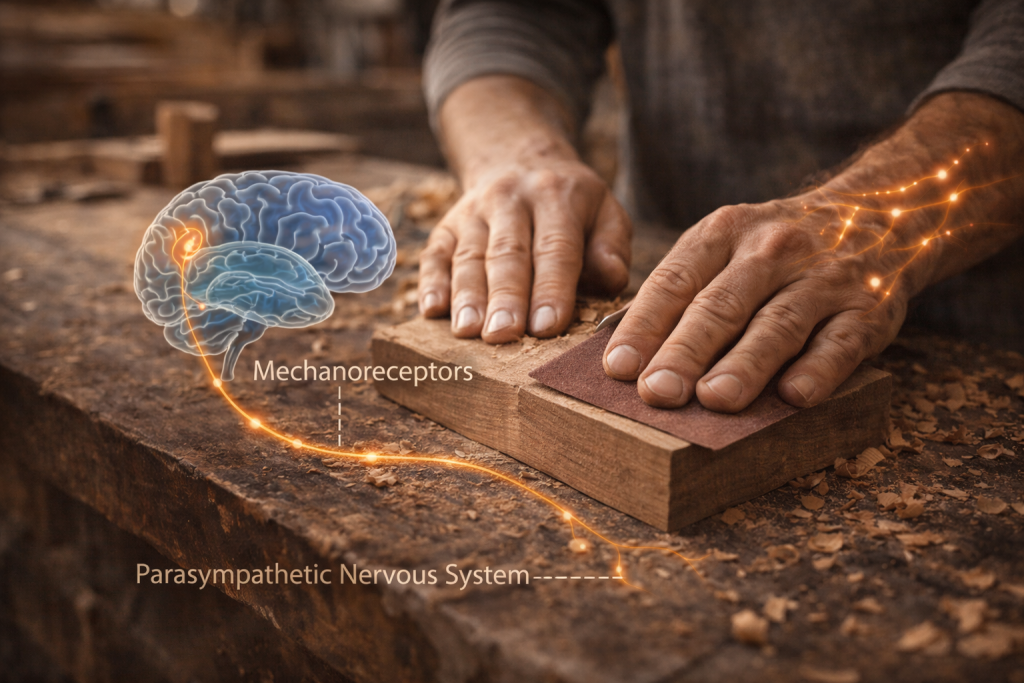
The skin is the body’s largest sensory organ. Mechanoreceptors embedded in the skin respond to pressure, vibration, and texture. These receptors transmit signals through the spinal cord to the brain, influencing emotional and physiological states.
Slow, consistent tactile engagement—such as sanding wood or shaping clay—can stimulate pathways associated with parasympathetic activation. This shift promotes slower heart rate, steadier breathing, and decreased muscle tension.
Research in somatic psychology suggests that bottom-up regulation (body-to-brain signaling) can be more effective in acute stress states than purely cognitive reframing. In other words, changing thought patterns is difficult when the nervous system is dysregulated. Sensory input provides an alternative pathway.
At Ironwood, tactile experience is intentional. Participants work with raw materials that provide resistance. Resistance requires pressure modulation. Pressure modulation requires awareness.
This awareness anchors attention to the present moment.
Tactile regulation also enhances interoception—the ability to perceive internal bodily states. Increased interoceptive awareness correlates with improved emotional regulation and decision-making.
Working with the hands becomes a training ground for emotional steadiness.
Leave a Reply